
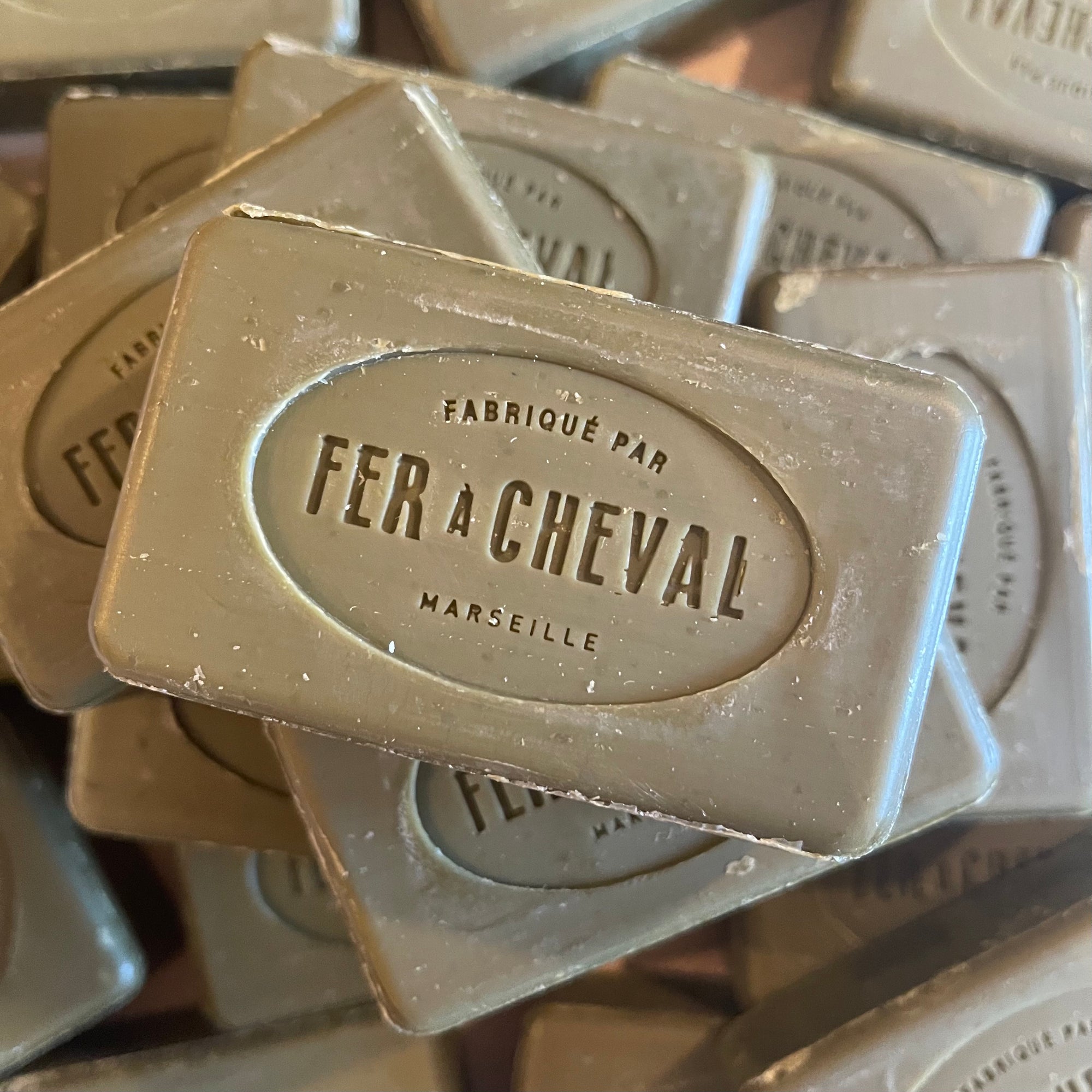
Savon de Marseille is one of the world’s most enduring household names — a soap so pure, so versatile, and so deeply rooted in French culture that it has been made in essentially the same way for over 600 years. Here’s the story behind the bar.
The Origins: 14th Century Marseille
The first documented soap maker in the Marseille region was recorded around 1370, though the tradition of soap-making in the Levant — from which Marseille drew much of its early knowledge — stretches back considerably further. The city’s position as a major Mediterranean trading port gave it ready access to the two key ingredients: olive oil from Provence and soda ash from the coast.
By the 17th century, Marseille had become the soap capital of Europe, with dozens of factories (savonneries) producing soap for export across the continent.
Louis XIV’s Royal Decree: 1688
In 1688, Louis XIV introduced strict regulations limiting the use of the name Savon de Marseille to soaps made in and around the Marseille area, and only from olive oil. This was one of the earliest examples of a protected geographical designation in France — a forerunner of the modern AOC (Appellation d’Origine Contrôlée) system.
Today, this law still applies, though the regulations now permit other vegetable oils alongside olive oil. What remains unchanged is the requirement for natural ingredients and the traditional production method.
How Traditional Marseille Soap is Made
The traditional process — known as the méthode marseillaise — is a slow, careful craft that can take up to a month from start to finish:
- Vegetable oils (primarily olive oil at 72%), sea water, soda ash (sodium carbonate), and lye (sodium hydroxide) are combined in a large cauldron.
- The mixture is heated for several days and stirred constantly until saponification is complete.
- The soap is then left to rest before being poured into large moulds to set.
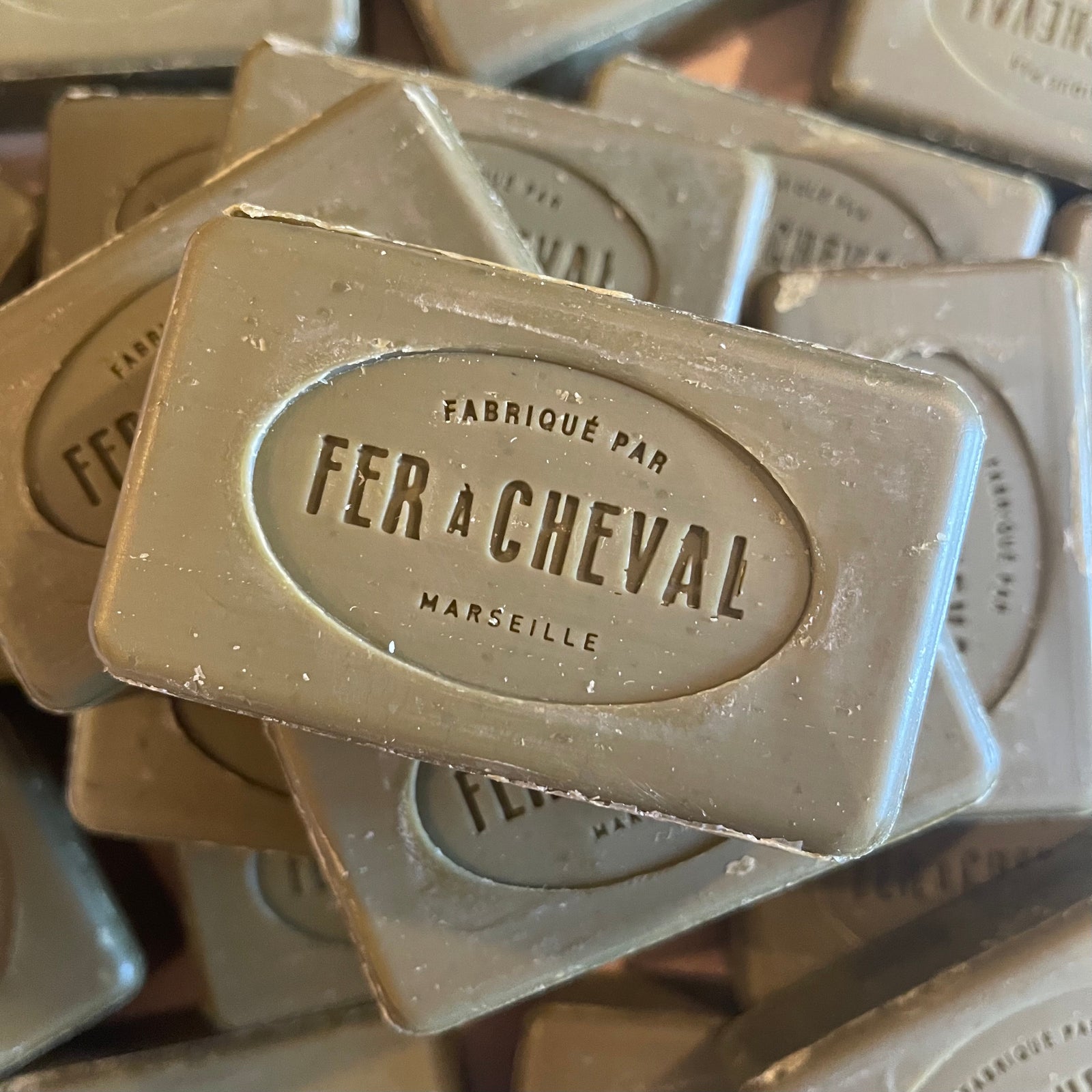
- While still soft, it is hand-cut into bars or cubes and stamped with the traditional mark.
- The bars are left to harden and cure completely — a process that gives Marseille soap its characteristic density and longevity.
How to Spot Authentic Savon de Marseille
Genuine Savon de Marseille is composed of at least 72% vegetable oil and contains no colourants, synthetic preservatives, or animal fats. Beware of cheap imitations — often imported from outside France — that use palm oil or animal fat as a base and lack the traditional stamp.
At Château du Savon, we source only authentic Savon de Marseille from trusted French producers. Explore our range:
- Savon de Marseille Fanny Soap Bar 125g — a classic, pure everyday bar
- Savon de Marseille Provence Lavender 125g — the most iconic Marseille scent
- Aloe Vera Savon de Marseille Soap Bar 125g — with organic shea butter for extra nourishment
- Savon de Marseille Eucalyptus Soap Bar 125g — naturally refreshing and antibacterial
- Savon de Marseille Stain Remover — Savon Détachant — the legendary household cleaning bar


